“The Indian whisky market is always changing. Each season brings new rules, every festival ramps up demand, and every state adjusts its tax policies to keep everyone alert. In the midst of all this, one brand stands out—Royal Stag.”
Kolkata, with its blend of tradition and modern consumer habits, creates its own story around whisky drinking. The chatter about the Royal Stag 750ml price in Kolkata is getting louder, especially after the recent updates for 2025. Consumers seek clarity. Retailers aim for predictability. The industry desires stability. However, prices do not follow a straight path; they fluctuate with policies, production, demand, and brand strategies.
The Present: Royal Stag 750ml Price in Kolkata (2025 Snapshot)
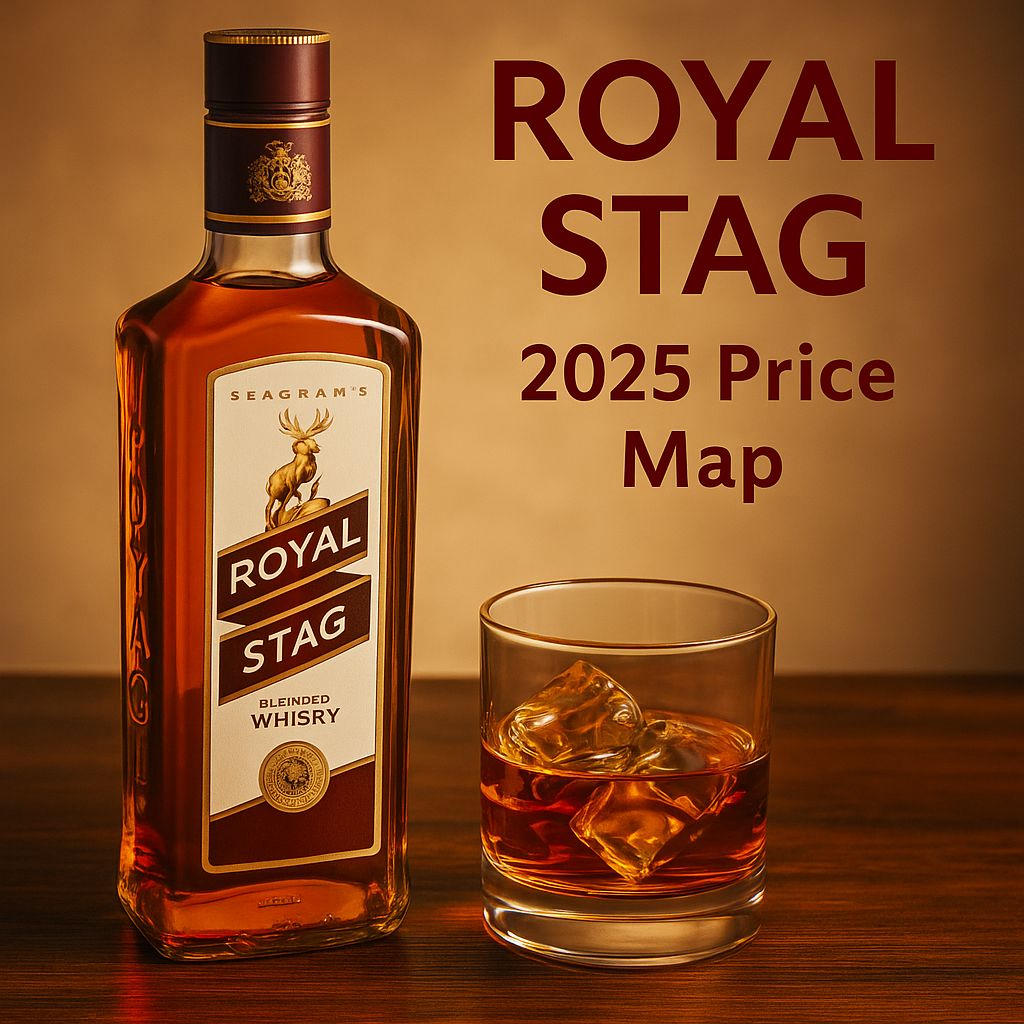
The latest data from MadiraPrice, dated 15 August 2025, shows that the price of Royal Stag 750ml in Kolkata is ₹780. It’s a simple number, but there is a lot of context behind it.
Kolkata’s price trends tend to be more stable compared to areas like Karnataka or Maharashtra, where state taxes frequently change prices. West Bengal has a middle-tier excise structure, which is neither too harsh nor too lenient. This keeps the price of a bottle hovering around ₹750 to ₹800 for most of the year.
Currently, the ₹780 price reflects the standard 750ml version, not the premium or barrel-select variants. Customers looking for smoother options will likely encounter higher prices that vary based on distributor stock, brand positioning, and seasonal supply.
Why is Kolkata’s price relatively steady?
- West Bengal doesn’t change excise duty often.
- Distribution lines from Eastern bottling units operate efficiently.
- Demand stays high but stable; the city loves whisky, but it’s not driven by impulse like other metro markets.
If you visit a typical licensed retail outlet today, the Royal Stag 750ml won’t shock you with drastic price changes. Consumers value this consistency, and retailers trust it.
The Backstory: How Royal Stag Pricing Evolved Across India
You can’t understand today’s price without acknowledging the journey that brought us here. The Royal Stag brand spent decades building loyalty. It established itself in India in the late ’90s, and from the beginning, it remained true to its identity: a whisky that offers affordability with aspirational value.
Here’s how the pricing changed over time:
- Early 2000s: The entry-level era Prices were very low because the brand aimed to dominate shelves. In many states, 750ml bottles dropped to as low as ₹250 to ₹350. Income levels were low, competition was not fierce yet, and state excise policies were less intense.
- 2010–2018: The stability phase Demand surged quickly. Whisky consumption across India exploded, especially in Tier-2 and Tier-3 cities. Prices gradually increased. Royal Stag positioned itself as a mid-range whisky—not cheap, not premium, but right in the sweet spot. In Kolkata during this time, the 750ml bottle ranged from ₹400 to ₹550.
- 2019–2023: The tax-heavy years State governments across India revised their excise revenue models. COVID-19 added chaos. Supply chains struggled. Logistics costs doubled. Suddenly, 750ml prices in many regions went beyond ₹600 to ₹700. Kolkata fared better due to more stable tax slabs, but the bottle still rose to ₹680 to ₹720.
- 2024–2025: The recalibration Brands simplified their operations, consumer demand stabilized after the pandemic, and competitive pricing returned. Royal Stag strengthened its market identity again, making the product accessible without lowering its image. This leads to today’s price of ₹780 in Kolkata.
The Bigger Picture: Pricing Variation Across India
If you zoom out, India looks like 29 different whisky markets pretending to be one. Every state sets its own excise duty. Every region manages distribution margins differently. Consumers swing between premium choices and budget realities.
The Royal Stag 750ml price varies greatly from state to state.
Examples of regional variations:
- Karnataka often sits at the high end due to heavy taxes.
- Delhi offers lower prices because of a friendly excise model.
- Maharashtra remains unpredictable; it has high duty, high consumption, and fluctuating prices.
- Uttar Pradesh typically stays in the mid-range but changes frequently.
This results in Kolkata having surprisingly stable rates. While other states see rapid changes, West Bengal keeps a comfortable middle ground.
Consumer Trends: Why Royal Stag Remains a Bestseller
Brands in India can vanish quickly if they make mistakes with pricing or quality. However, Royal Stag continues to succeed because it meets important criteria.
- Consistency at scale : Consumers appreciate reliability. Royal Stag offers a consistent profile. It’s not too smoky or too sharp and is smooth enough for regular drinkers.
- Strong mid-segment dominance : It excels in the space between budget whiskies and premium options like Blenders Pride or Antiquity Blue. This "middle child" position works well in India.
- Availability across geographies : Whether in small towns, big cities, or remote areas, the distribution network is unmatched.
- Marketing that speaks aspiration : The brand uses celebrity endorsements, cricket partnerships, and lifestyle messaging. People are drawn to aspirational stories, especially in urban hubs like Kolkata.
- Controlled pricing strategy :Royal Stag rarely changes prices dramatically, unlike competitors that raise their prices sharply during high-demand periods.
The Kolkata Market: A Unique Ecosystem
Kolkata's connection to whisky has a rich history. The city appreciates classic drinks, honors traditions, and values genuine experiences. The way people buy whisky shows thoughtfulness rather than quick decisions. This influences pricing, drinking habits, and brand loyalty.
Here’s what makes Kolkata unique:
- Stable purchasing behaviour Even when prices rise sharply in other cities during festival seasons, Kolkata shows consistent buying patterns.
- Bar culture vs home consumption Home drinking is the main trend. Bars play a role, but most demand comes from retail sales. This keeps pricing more uniform.
- Distributor trust cycles Retailers in Kolkata often partner with the same distributors for many years. This longstanding trust stabilizes margins and helps maintain predictable prices.
The Economics Behind the ₹780 Price Tag
A 750ml bottle doesn’t arrive in your hands after just one step. It goes through an entire journey.
Here are the cost factors behind the current pricing:
- State excise duty (biggest chunk)
- Brand-set MRP
- Distributor’s margin
- Retailer's margin
- Transportation and logistics
- Seasonal demand pressure
In West Bengal, the excise structures keep the ₹780 price both fair and sustainable. The brand gets its share, the distributor earns a margin, and retailers remain profitable without overcharging consumers.
The Future: Where Royal Stag Pricing Is Going
2026–2028 will decide the next chapter for whisky pricing in India. Analysts predict three big shifts:
- Mild upward revisions : Raw material costs rise every year. State taxes rarely drop. Expect a ₹20–₹40 increase during the next fiscal cycle in Kolkata.
- Premiumization of the mid-segment: Middle-class consumers lean toward smoother, richer variants. Royal Stag may push premium editions more aggressively, slightly widening the price brackets.
- Digital distribution pressure: Online liquor delivery (legal in some states, evolving in others) may introduce competitive pricing. Kolkata could adopt hybrid distribution models, pushing price recalibration.
But one thing’s clear: Royal Stag won’t abandon its value-for-money philosophy. The brand thrives on accessibility, and that won’t change.
What Consumers Should Expect in 2025, 2026
- Small increases, not dramatic jumps
- Seasonal spikes during Durga Puja and New Year
- Strong availability
- Potential introduction of new variants
- Slight premium on barrel-aged editions
Kolkata will still get one of the most dependable price brackets in the country.
Royal Stag remains a strong player because it values balance. It mixes nostalgia with modern demand, affordability with aspiration, and consistency with innovation.
The ₹780 price tag reflects not just the cost of whisky but an entire system working smoothly. Consumers are loyal to the brand, retailers are dedicated to fair trade, and the market values stability over chaos.
“The past shaped the brand’s legacy. The present keeps it steady. The future promises growth: slow, steady, and strategic.
For whisky lovers in Kolkata, Royal Stag isn’t just a bottle on a shelf. It’s a reliable part of the city’s drinking culture.”